



Last month I gave a talk at the wonderful Greenman festival in Wales.
The brief was to offer something experiential and participative.
My talk was called: Becoming Crew on Spaceship Earth - obviously…
For part of it I decided to tell a story - something I wrote about 5 years ago.
I adapted that into an audio story and released it in Episode 56 ‘ Becoming Crew - A story about stories’ - which you can listen to again here.
It’s a 26 minute immersive exploration of how stories play a dominant role in shaping our perceptions and ways of seeing, being and acting in the world.
And how one particular story of human exceptionalism and separation from the rest of the living world may well be at the centre of the meta/poly/everything crisis we are in today.
Or at the very least in coming to terms with it.
Stories are powerful technologies
Stories are powerful technologies as my friend Ella Saltmarshe once said to me.
Deeply ingrained cultural stories, shape and inform the design of everything we do - the policies we live by, the technologies we create, the ways we educate, how we organise ourselves and critically our perceptions of ourselves, each other and the more-than human world around us.
The ways we see.
When I say ingrained - I mean they are often invisible to us, so deeply rooted, they are seen as ‘common sense’ and just ‘how things are’ - and that we rarely question them.
Yet they inform the design of the human systems and structures we live within, that shape how we live, our beliefs, the perception of what/who matters and what/who is valued around us.
Alnoor Ladha said to me ‘we are living in the age of consequence.’ This great unravelling from all that has been designed and structured over the last few hundred years and has massively accelerated in the last 50 years.
I’ve come to see that we are suffering the consequences of some big stories that we’ve been living by at the centre of our culture for too long - without critical questioning.
Like…
The story of infinite economic growth
The story of no limits
The story of ‘nature as resource’ solely for human progress.
The story of getting ahead of everyone else
The story of productivity = success
The story of nation states - somehow immune from things beyond our ‘borders.’
The story of utopian possibilities of technology enabled everything.
The story of endless progress and optimism that the future will somehow always be an improvement on the present.
The story of unregulated commerce, capital accumulation and profit maximisation as the only way to organise the human species.
These are all separation stories because firstly they tell us that there are no consequences that we cannot deal with or solve
They tell us that we are not part of a complex living planet, where life is created and sustained through relationships, interdependence and entanglement.
They tell us that we operate on a different set of laws and logics from every other living species on the planet.
These are all exhausted stories, expiring stories as Vanessa Andreotti says
Dying stories I would say.
When I wrote this 5 years back I reframed the meta/poly/everything crisis as a story crisis.
While I still feel that, I have come to understand more deeply that stories themselves are relational things.
They are created between things.
And they are living not fixed.
Stories are relational
Because how we see the world around us, informs how we relate to the world around us which in turn determines how we story the world around us.
And how we story the world around us determines how we see the world around us which determines how we relate to the world around us.
Perhaps we are now living in a civilisational relationship crisis ?
A crisis created through centering stories based on ways of seeing and relating to ourselves, to each other and with this more-than-human planet that we are now understanding are not true.
Facing into a relationship crisis
I’ve come to see that one part of facing into a relationship crisis, in accepting the crisis and all its messyness, not knowing and discomfort, involves learning to notice and understand the relatedness in that relationship.
How am I seeing and perceiving, acting and behaving and what are the stories I have been carrying that inform and shape the way I have been relating to things ?
Still with me?
It gets a bit tricky this stuff so here’s some quick examples to illustrate what I mean about stories being relational - how the way we story the world determines how we see the world and therefore how we relate to the world.
I hope they help!
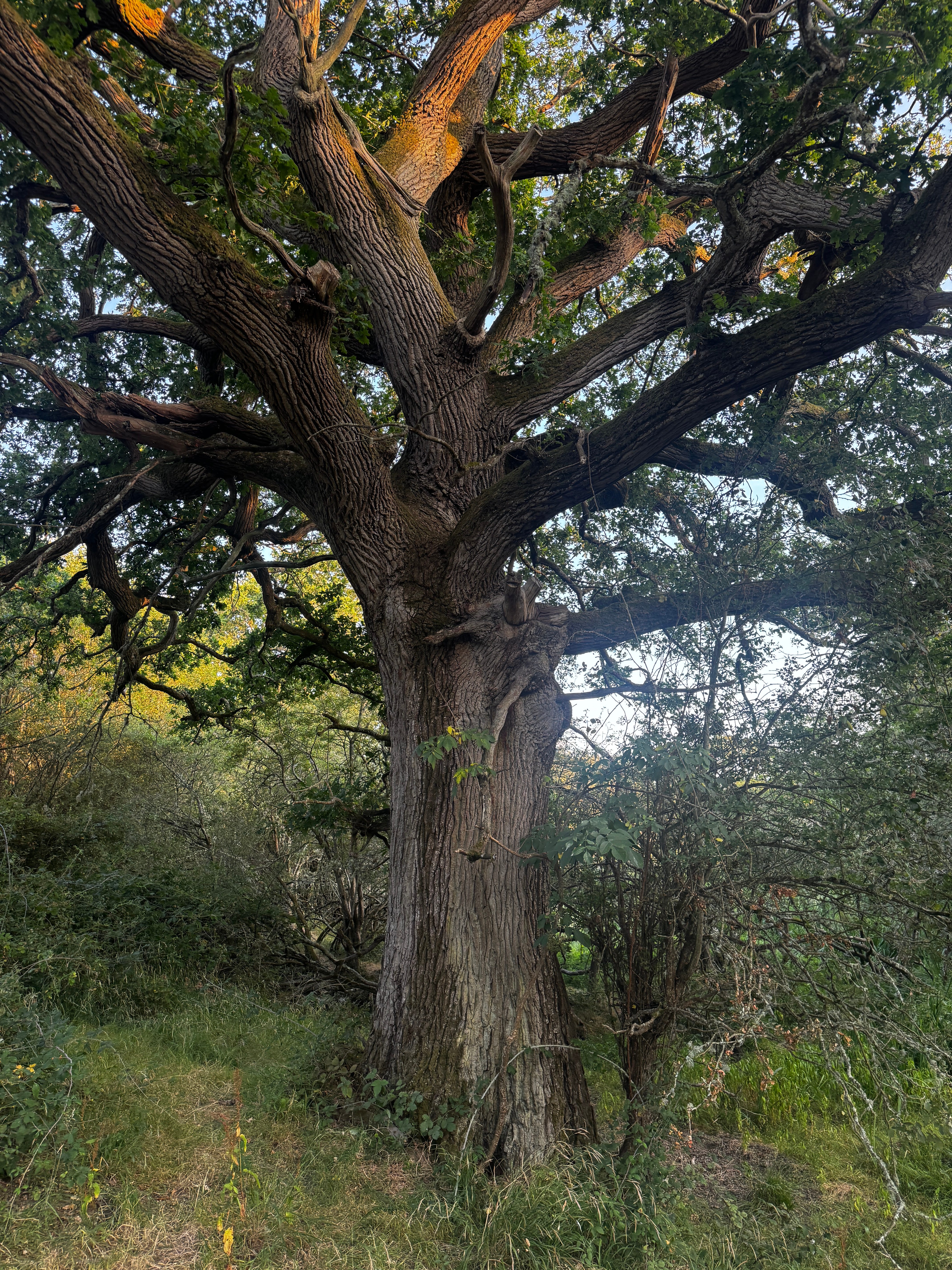
This is a tree
It’s a thing that grows everywhere.
We use it for wood to burn and for materials to build things.
Sometimes we eat its fruit or nuts.
Their leaves look nice but they cause problems when they drop.
They must be cleared up - there are machines that can do that really fast.
They grow in unpredictable ways, so we must cut their branches to make sure they are safe for humans.
Often we must cut them down completely to clear the way to build new things.
They don’t feel anything anyway, because they’re just trees.
It’s ok to do that, because that’s why they are here for humans to use.
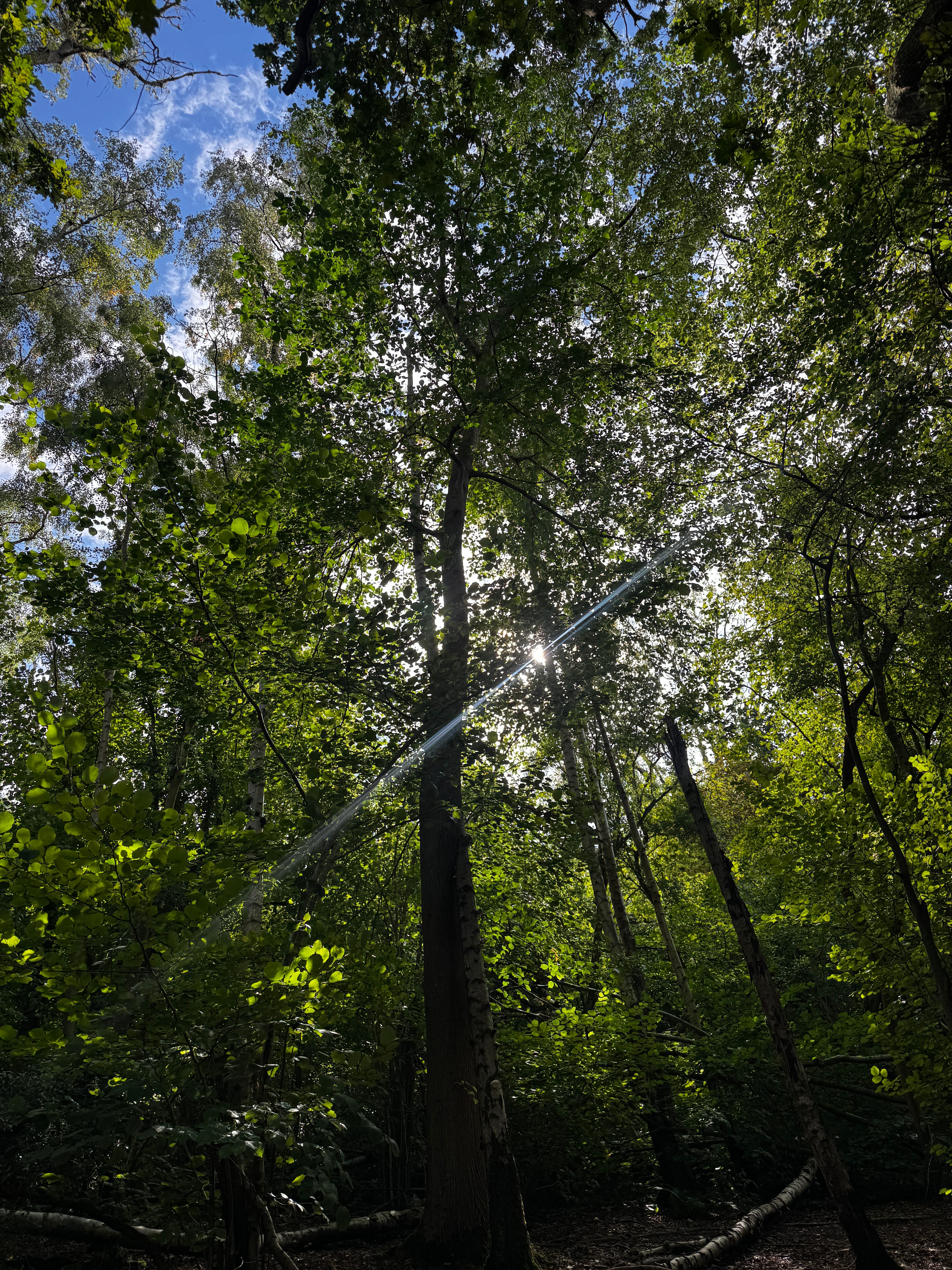
This is a living being we call ‘tree.’
They have been on this Earth for millions of years.
They arrived here long before humans existed.
Many cultures throughout time have seen them as elders.
To be respected for their ancient wisdom.
They are complex beings who communicate at an inter-species level.
The technology in their leaves is so advanced they can eat sunlight and turn it into food.
They are in constant relationship and practice mutuality and reciprocity with multiple species around them.
Above and below ground.
They breathe in the CO2 that we breathe out and convert it into oxygen that enables us to live. (Are we tree ?)
They hold water in the land, prevent flooding and can cool urban temperatures up to 12 degrees.
When they die they continue to sustain life and serve their local community.
One tree two very different ways of storying, seeing and relating to the tree.
Ok here’s another….
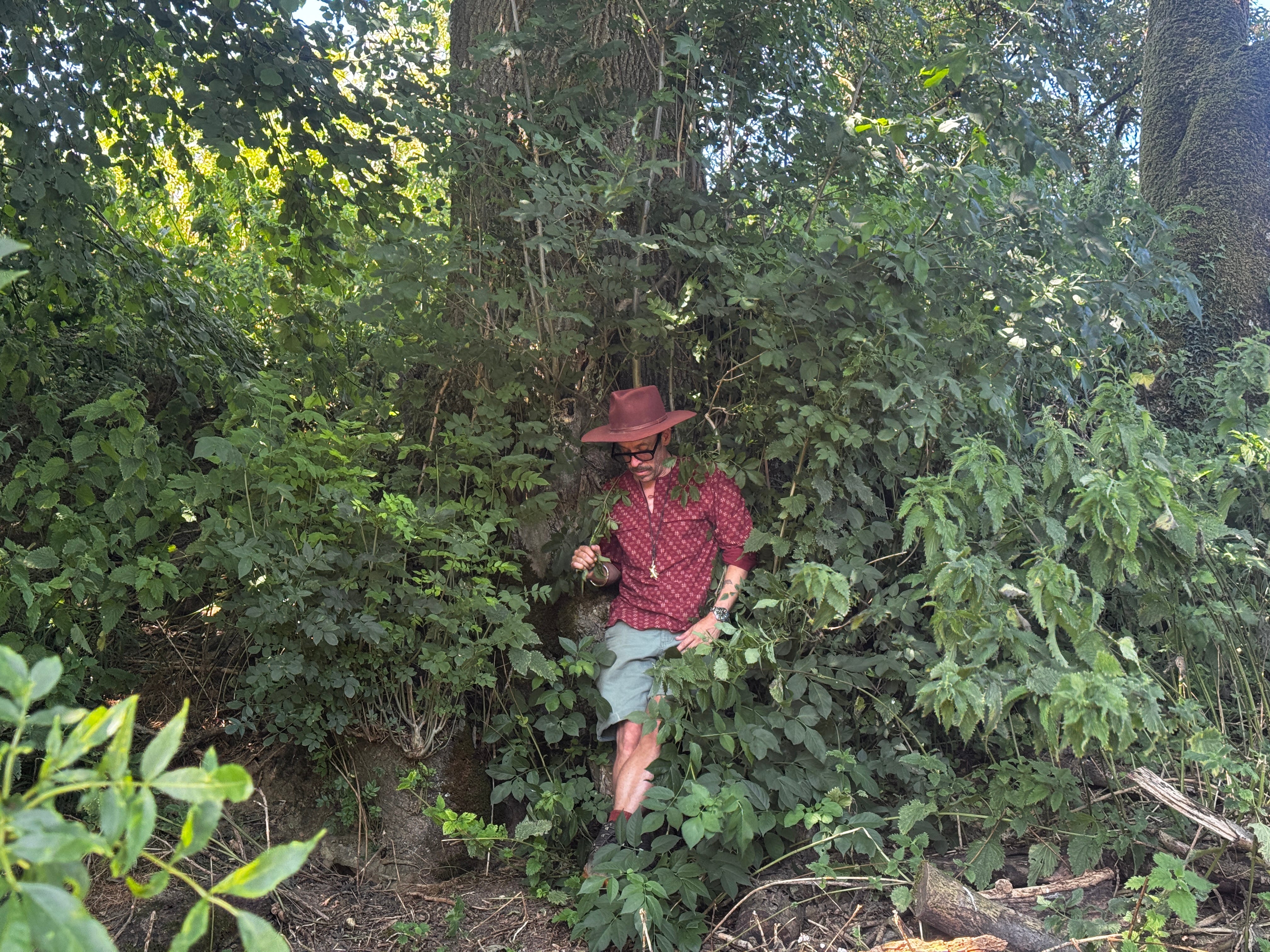
I am a person
I have a body
I have a head which controls my body.
I am a separate self.
I have human genes.
I am human and not part of nature.
Nature/the environment is over there.
I am an ecosystem -
57% of my cells are non-human micro-bacterial cells,
I have 20 million non-human genes in my body vs 20 thousand human genes.
I share 60% of the same genes with a fruit fly and a banana.
The health of my gut is interconnected with the health of the soils from which my food is sourced.
The food I eat can inform the thoughts I have.
The traumas of my ancestors can still live through me today.
One human body - two very different ways of storying, seeing and relating to this human body.
And one more…
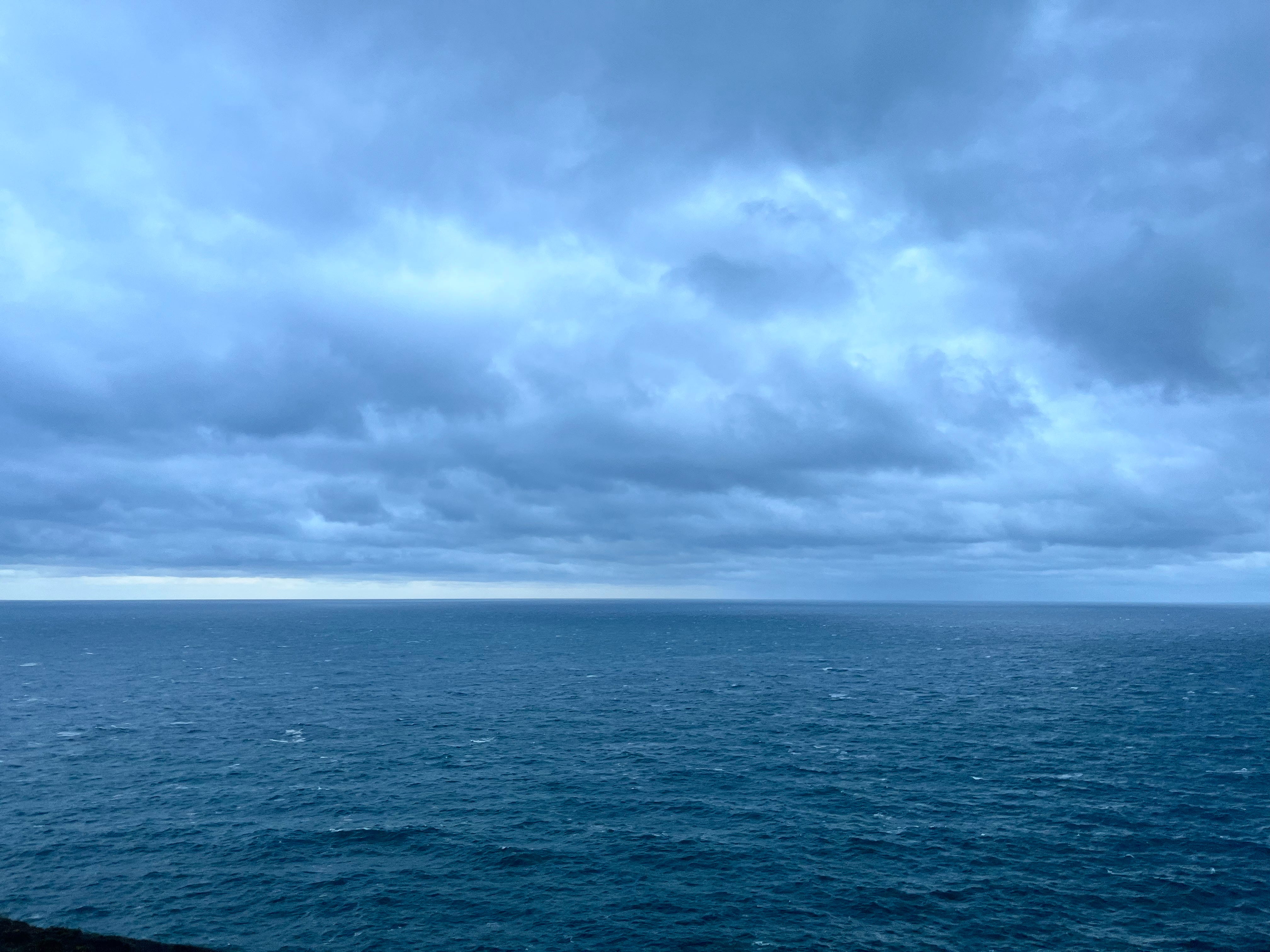
This is the Sea
There are many seas
The sea is a place to go on holiday, swim and do watersports.
It’s full of fish for us to eat whenever we want.
There is so much sea, we can put stuff we don’t want in there and it will be fine.
It’s very far away from most of us anyway.
There’s some very dangerous things in the sea, like sharks that kill humans.
This is the Ocean
All waters on the Earth lead to the Ocean - there is only one Ocean.
The ocean is full of complex relationships between vast numbers of different creatures, currents, systems and life forms that we are only just beginning to understand.
(We know more about the surface of Mars than the bottom of the ocean)
One multi-species relationship in the ocean creates at least 50% of the oxygen we all breathe - every second breath you take comes from the ocean.
The health of the ocean shapes and determines much of the weather and climate that we experience on land.
Humans kill about 100 million sharks every year, whereas sharks kill between 5 to 10 humans in the same year.
The Earth is 70 % Ocean
70 % water
When we are born our bodies are 70 % water
We have saltwater blood in our veins.
One ocean - two very different ways of storying, seeing and relating to the ocean.
I’ll stop there.
I hope you can get a feeling for this.
How we see the world around us really matters,
Dead or alive ?
Machine or mystery ?
Separate or entangled ?
Passenger or crew ?
Because seeing informs how we relate to other life around us, including ourselves and others not like us - and that in turn informs the stories that we carry and live by which then impact all of the relationships on-board the Spaceship.
So stories truly matter.
And they are relational, they are living.
They exist between things.
As I began the talk at the Greenman Festival the sky darkened and it absolutely chucked it down with rain - which in some ways added to the theme of entanglement and connection with the more-than-human - and a few lovely people joined me on the stage to stay dry.
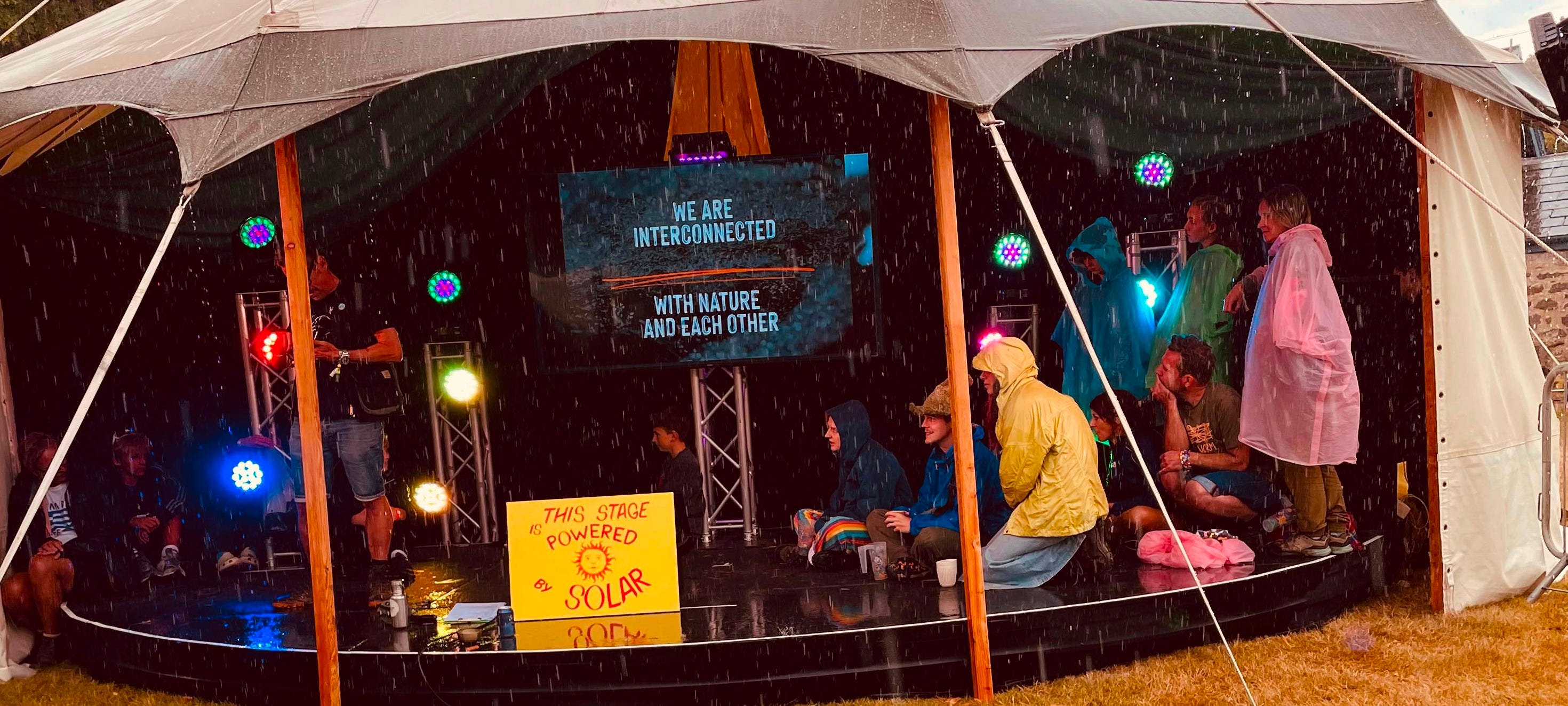
A couple of folks approached me after saying they appreciated the story, so I thought I’d republish the episode and share these reflections.
Because we are not separate from ‘nature’
We are a part of ‘nature’ not apart from ‘nature’.
Because everything is nature.
And everything is earth
So everything is spaceship.
If I was to finish with an invitation it might be to become curious noticers of the stories that we carry and the stories that guide you or whip you along.
What’s behind those stories ?
How are those stories informing your relationships, to self, to others and to the more-than-human world around you ?
How do they shape the ways you perceive and see the world around you ?
And so we don’t get too certain about any of this, I’ll leave you with these words from Bayo Akomolafe that he shared with us on a crew learning journey a few years back
“There are things that escape our stories; worlds outside our grammar and our linguistic constructions, that are powerful agents that will not be gentrified in our search for meaning. We need to come into touch with what is not yet storied and open ourselves to strange encounters. Maybe then, the terms and the words and sentences for new stories will happen to us”
Bayo Akomolafe
If this post speaks to you and/or you appreciate the audio episode please do share any reflections and pass it on to someone else who may dig it.
You may also find this project Stories for Life, which I co-authored, of interest.


